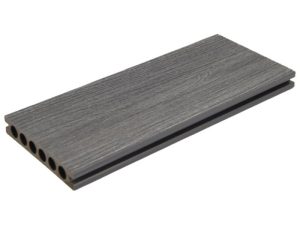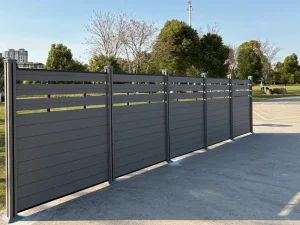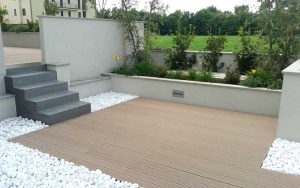
The selection of fences is crucial in the creation of courtyard landscapes and outdoor spaces. Plastic wood fence, as an innovative composite material product, has become an increasingly popular choice to replace traditional wood and plastic fences in recent years due to its comprehensive performance advantages. It not only retains the warm texture of natural wood in appearance, but also achieves significant improvements in physical performance and user experience, providing a stylish and practical enclosure solution for modern living spaces.
Excellent durability of plastic wood fence
Plastic wood fences are made by combining wood fibers with plastic, combining the natural texture of wood with the toughness of plastic. It is naturally endowed with excellent moisture and corrosion resistance, and is completely free from the troubles of insects and mold. Whether it is long-term exposure to the scorching sun or continuous rain erosion, it will not easily crack, deform or rot like ordinary wood. Its material stability is extremely strong, able to withstand the impact of seasonal temperature differences, and its service life far exceeds that of traditional wooden fences. After many years, it can still maintain its sturdy appearance and structural integrity.
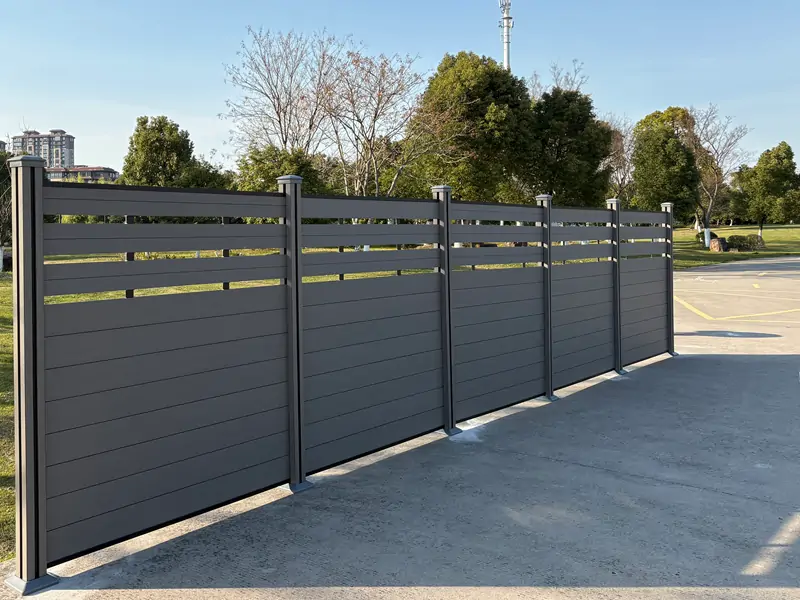
The low maintenance cost advantage of plastic wood fences
Plastic wood fences require almost no specialized maintenance. It is not afraid of moisture and pests, and does not require annual painting, waxing, or anti-corrosion treatment like solid wood. Daily cleaning only requires rinsing with water to restore cleanliness, eliminating the continuous cost of purchasing maintenance materials and hiring labor. This high stability ensures that it is not easily deformed or damaged during long-term use, avoiding the trouble and additional expenses of frequent maintenance or replacement, and truly achieving long-term worry free and cost saving after installation.
Environmental and safety characteristics of plastic wood fence
Plastic wood fences mainly use recycled plastics and wood powder as raw materials, effectively utilizing waste resources, reducing dependence on natural wood and environmental pollution caused by plastics, and reflecting the concept of circular economy. Its production process and finished products are both more environmentally friendly. In terms of safety, the surface of the plastic wood fence has been treated to be smooth and free of burrs, avoiding the risk of scratches that traditional wood may bring, and has anti mold and anti-bacterial properties. It usually does not contain harmful chemicals such as formaldehyde, providing a healthy and reliable protective barrier for spaces such as family courtyards and children’s play areas.
Diverse design and installation convenience of plastic wood fences
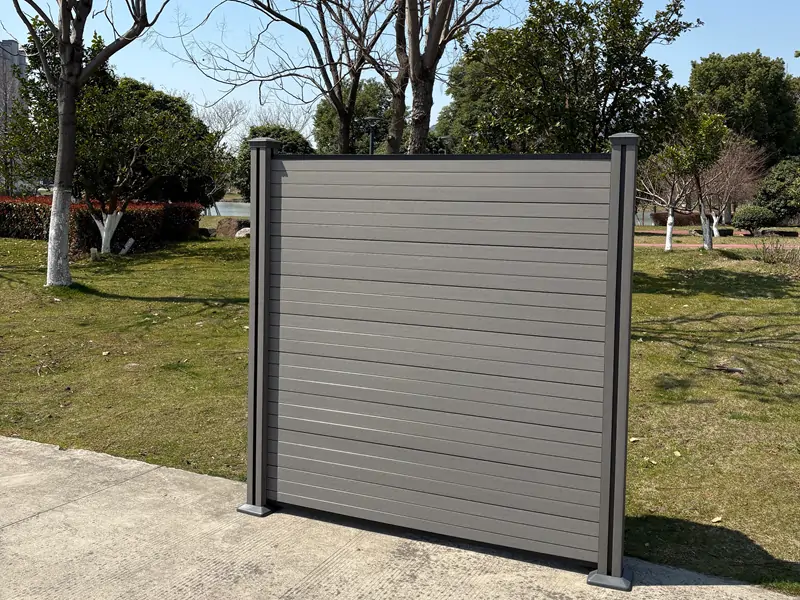
Plastic wood fences provide rich colors and imitation wood textures, which can realistically restore the texture of wood. At the same time, they have various styles such as modern simplicity, which can flexibly match various types of buildings and garden landscapes. Its profiles are mostly designed with modularity, equipped with dedicated buckles, connectors, and concealed fixing systems. The installation process is like assembling building blocks, without the need for complex woodworking techniques. The construction is fast and efficient, and can be easily cut and adjusted according to the terrain, ensuring that the fence lines are neat, sturdy and durable, significantly improving the efficiency and overall aesthetics of the project.