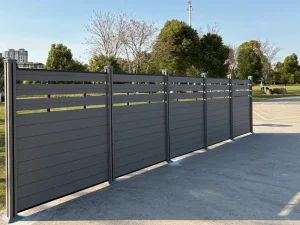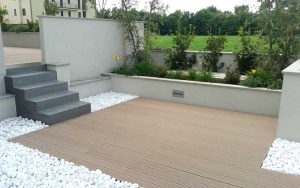
In the field of contemporary architecture, the choice of exterior wall materials is not only related to the aesthetics of the building, but also directly affects its long-term reliability and environmental impact. WPC exterior wall cladding, as an innovative composite material, is demonstrating dual value in enhancing building durability and environmental performance due to its unique performance advantages, providing an ideal solution for modern buildings that combines strength and greenness.
Material composition and core characteristics of WPC exterior wall cladding
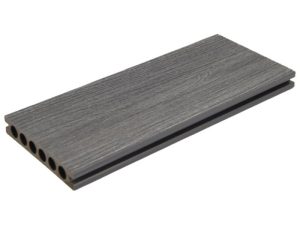
WPC exterior wall cladding is mainly composed of wood fibers or plant fibers combined with thermoplastic materials such as polyethylene and polypropylene. Its core feature lies in the combination of the dual advantages of wood and plastic: wood fibers provide natural texture and rigidity, while the plastic matrix endows it with excellent waterproof, moisture-proof, and corrosion-resistant capabilities. This material is not easy to crack or rot, and can effectively resist insect and mold erosion. At the same time, it has good dimensional stability and UV resistance, providing a sturdy and durable protective layer for exterior walls.
Analysis of Key Technologies for Improving Building Durability
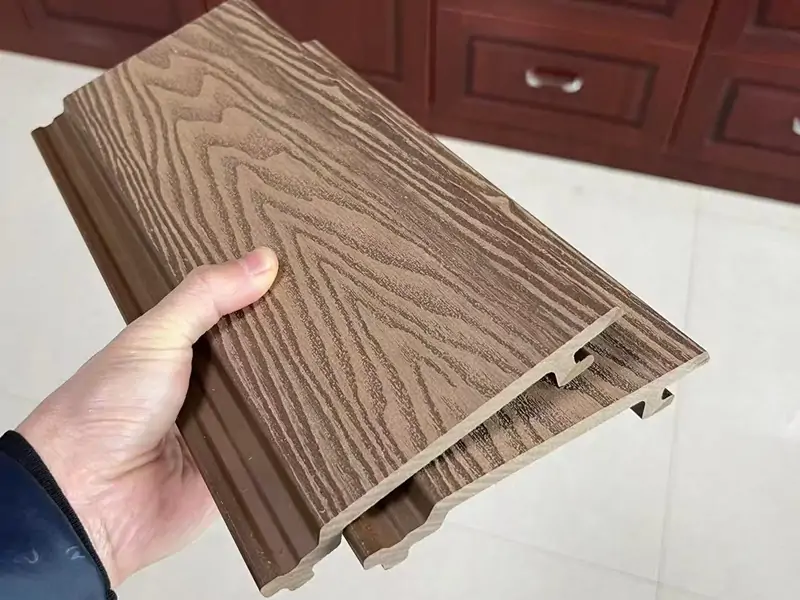
WPC exterior wall cladding uses polymer coated wood fibers to form a dense composite structure, effectively blocking moisture infiltration and avoiding traditional wood decay and warping problems. The antioxidants and UV stabilizers added to its formula can resist aging caused by sun and rain for a long time, maintaining color and strength. The unique snap on installation system not only improves construction efficiency, but also dissipates thermal expansion and contraction stress through elastic connection design, preventing cracking and deformation. This material combines rigid support and resilient cushioning, and remains stable in harsh weather conditions, significantly extending the maintenance cycle of building facades.
The Implementation Path and Sustainable Value of Environmental Performance
WPC exterior wall cladding mainly uses recycled wood fibers and plastics as raw materials, directly reducing natural wood cutting and plastic pollution. Its production energy consumption is lower than traditional building materials, and it does not contain harmful substances such as formaldehyde, reducing environmental load from the source. The product has a long service life and low maintenance requirements, reducing replacement frequency and resource consumption. After disposal, materials can be recycled and reused to achieve resource recycling and effectively reduce construction waste. This significantly reduces the carbon footprint of construction projects throughout their lifecycle, meets green building evaluation standards, and provides substantial support for sustainable development.