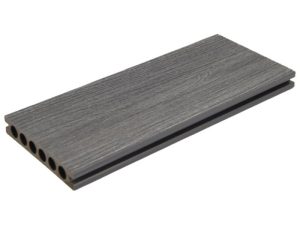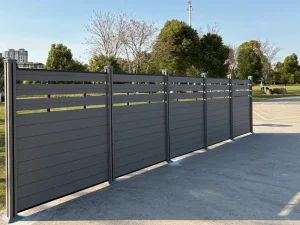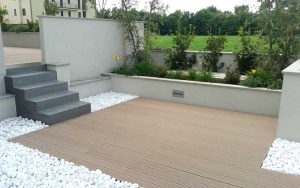
WPC flooring is becoming an ideal choice for modern outdoor spaces such as courtyards, terraces, and balconies due to its unique advantage of combining natural wood textures with excellent durability of plastic. Faced with a wide variety of brands and specifications of plastic wood products in the market, consumers often feel confused when choosing. To ensure value for money investment and create a durable, aesthetically pleasing, and comfortable outdoor environment, mastering scientific and practical purchasing techniques and core considerations is the key first step in making wise decisions.
Core indicators: density and extrusion process
Density is the cornerstone of measuring the quality of plastic wood flooring. It is directly related to the mechanical properties of the product, and high density means a tighter molecular structure, bringing stronger impact resistance, bending resistance, and load-bearing capacity. The density of high-quality outdoor plastic wood flooring is usually not less than 1.2 grams per cubic centimeter, with a firm feel and not easily warped or deformed due to temperature changes or external forces. Consumers can make preliminary judgments by simply weighing and observing the compactness of the particles in the cut surface.
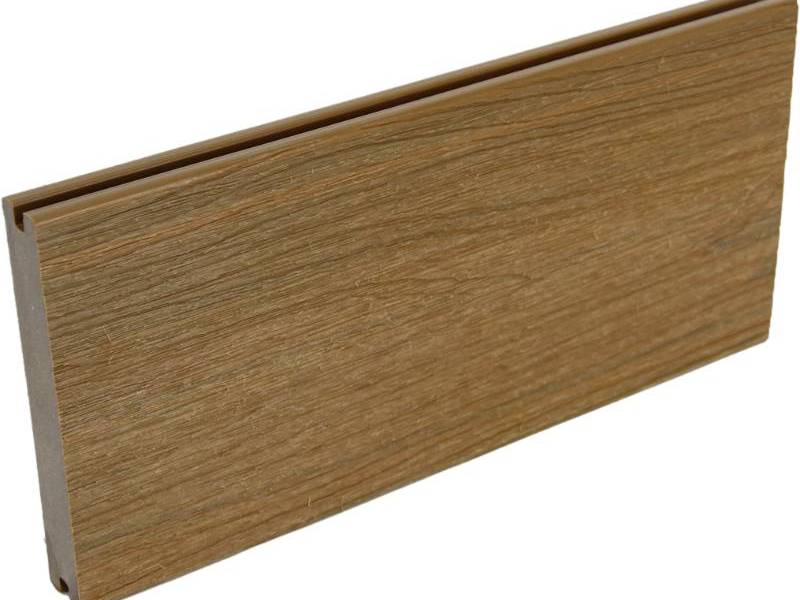
Extrusion process is the core technology that endows plastic wood flooring with excellent durability. This process involves synchronously extruding an ultra-thin polymer protective layer on the exterior of the plastic wood substrate using precision equipment. This shell is like invisible armor, specifically designed to resist UV radiation, moisture penetration, wear and mold. The flooring using full coverage co extrusion technology has significantly improved anti fading ability, anti slip performance, and surface hardness, making it less prone to scratches during daily use and easier to clean and maintain.
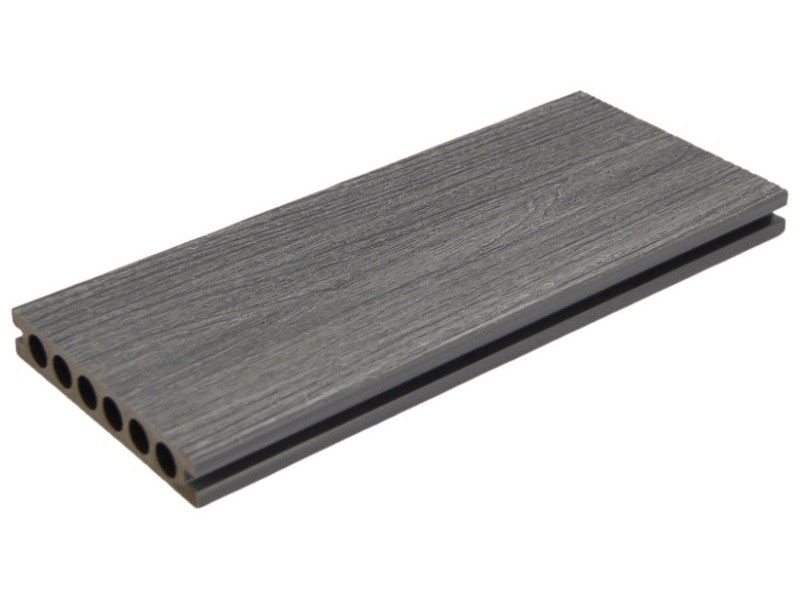
Structural Design: Choose between Hollow and Solid
Plastic wood flooring mainly has two types of structures: hollow and solid. The hollow floor is designed with regular cavities inside, which makes it lightweight and easy to handle and construct. Its structure is conducive to the rapid drainage of accumulated water, keeping the lower part of the floor dry, while also having a certain degree of elasticity and a relatively comfortable foot feel. This type of flooring is very suitable for leisure areas such as ordinary family courtyards, balconies, terraces, etc. that do not require high load requirements, and usually has better cost-effectiveness.
Solid flooring is a completely dense profile with a thick and solid texture. It has excellent compressive and flexural strength, capable of withstanding greater weight and more frequent trampling. In densely populated commercial spaces and places where heavy outdoor furniture needs to be placed, solid structures can provide more reliable support and are less prone to deformation. Its sound insulation effect is usually better than hollow flooring.
The key to selection lies in evaluating the usage scenarios. Regardless of which one is chosen, the rationality of the internal structure is crucial. High quality hollow flooring is not simply hollow, it should contain scientifically distributed reinforcement bars inside. These criss crossing support structures, like the beams and columns of a building, ensure the overall rigidity and impact resistance of the flooring, preventing collapse or fracture under stress.
Material ratio and environmental friendliness
The material ratio is the core that determines the performance of plastic wood flooring. The ratio of wood powder to plastic (such as PE, PP) needs to be precisely balanced. If the content of wood powder is too high, the water absorption of the floor will be enhanced, and long-term outdoor use can easily lead to size expansion and deformation, resulting in a decrease in strength; If the plastic content is too high, the product will lose its natural wood grain texture, have a stiff touch, and increase the coefficient of thermal expansion and contraction. The proportion of high-quality plastic wood pursues the unity of performance and aesthetics, ensuring stability while retaining realistic textures.
Environmental friendliness is an important consideration for modern homes. Plastic wood itself has environmental properties because it often uses recycled plastics and agricultural and forestry waste fibers. Be cautious of inferior products when making purchases, as they may use waste from unknown sources or add excessive harmful additives to enhance performance. Be sure to request authoritative testing reports from merchants, focusing on checking whether the formaldehyde emission and heavy metal (lead, cadmium, etc.) content meet national standards. Choosing a brand that emphasizes sustainable development means having stricter control over material sources and production processes.
Pre consideration for installation and maintenance
The installation process determines the lifespan and aesthetics of the floor. It is necessary to ensure that the bottom keel is firmly supported, with a recommended spacing of no more than 30 centimeters. The keel itself needs to be treated with rust prevention and kept flat. When laying the floor, expansion joints must be reserved between the boards and between the boards and the walls, with a width of about 5 to 10 millimeters. This is the key to dealing with material thermal expansion and contraction and preventing arch deformation. Use stainless steel or galvanized special buckles and screws for fixation, avoiding the use of ordinary iron nails.
Daily maintenance can maintain the optimal condition of the floor for a long time. Regularly clean fallen leaves and dust to prevent blockage of drainage holes. Local stains can be cleaned promptly with clean water or neutral detergent combined with a soft bristled brush. Avoid using strong acids, strong alkalis, or corrosive cleaning agents as they may damage the surface protective layer. When using a high-pressure water gun for cleaning, a certain angle and distance should be maintained, as direct frontal impact may cause damage to the co extruded layer. Although plastic wood flooring is mold resistant, long-term exposure to damp and dark environments may still breed moss at the joints. Regular inspection and cleaning can help maintain a dry appearance.