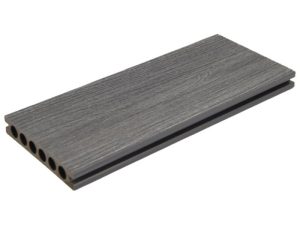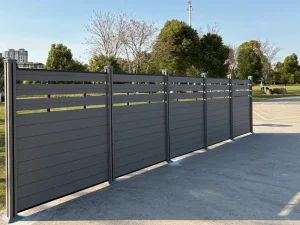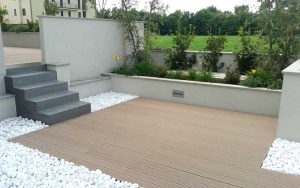
When choosing a fence for a yard or garden, plastic wood and traditional wood are the two most common choices. Faced with different voices in the market, many homeowners may wonder: which one is more suitable for their outdoor space? To answer this question, we cannot rely solely on intuition, but need to make practical comparisons from several core aspects such as durability, maintenance costs, appearance preservation, and long-term value.
Comparison of Durability between Outdoor Plastic Wooden Fences and Traditional Wooden Fences
The core advantage of outdoor plastic wood fences lies in their excellent durability. It is composed of plastic and wood fibers, which are naturally resistant to moisture, decay, and insect infestation. It is not easy to crack or deform under rain, snow, and sunlight, and has a service life of more than ten years. Although traditional wooden fences have a natural texture, the wood is prone to water absorption, expansion, drying, and shrinkage in outdoor environments, leading to cracking, warping, and susceptibility to termite infestation. It usually requires frequent maintenance to delay aging and has lower long-term durability than plastic wood materials.
Daily maintenance and upkeep costs for two types of fences
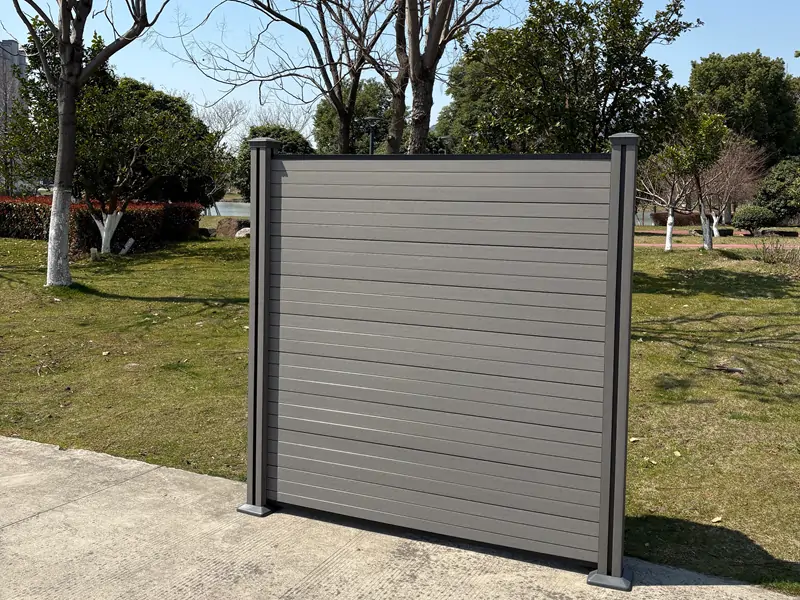
Traditional wooden fences require regular maintenance, usually requiring repainting or sealing every 1-2 years to prevent decay, cracking, and fading. The long-term accumulation of materials and labor costs is relatively high. In contrast, outdoor plastic wood fences are made of composite materials, which have excellent weather resistance and require almost no special maintenance. It is not afraid of moisture and insect infestation, will not crack, and only needs to be cleaned with water in daily life, which can significantly save long-term time and money investment and bring more convenience to users.
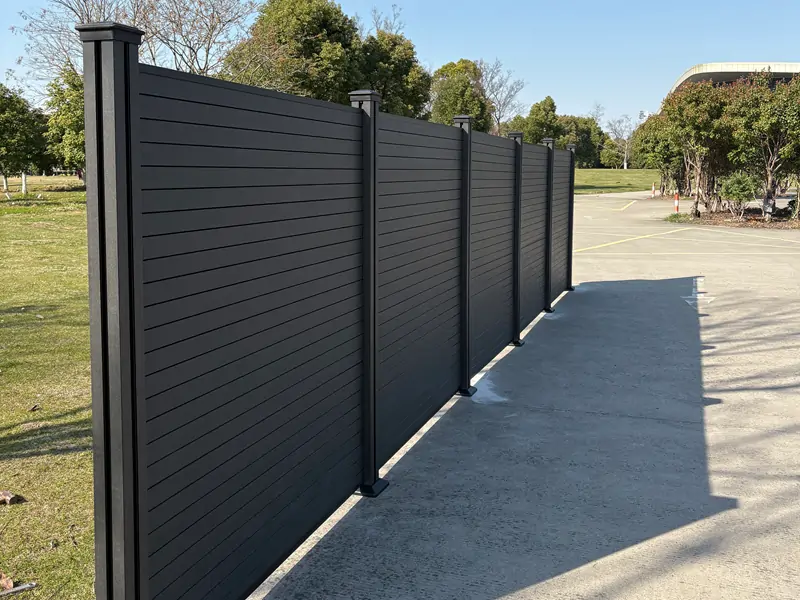
Practical considerations for appearance and environmental performance
Outdoor plastic wood fences provide rich colors and imitation wood textures, which can resist UV rays for a long time, are not easy to fade or crack, and have a long-lasting and stable visual effect. Traditional wooden fences have natural wood grain and texture, but they are prone to becoming dull and cracking after long-term exposure, requiring frequent maintenance to maintain their appearance. In terms of environmental protection, plastic wood mainly utilizes recycled plastics and wood powder, reducing waste and deforestation; Although traditional wood is a renewable resource, anti-corrosion treatment may involve chemicals, and the consumption of high-quality wood puts pressure on forest resources.